Pages

Saturday, 16 February 2019

My experience in Diverse Intelligence Summer Institute, University of St Andrews, Scotland

Last summer (September 2018), I participated in Diverse Intelligence Summer Institute, University of St Andrews, Scotland. The goal of this DISI is to gather scholars and students working in the field of cognition and build connections. The "intelligence" includes the human brain, animal cognition, artificial intelligence and even plant intelligence. The summer school was intensive two weeks of lectures, discussions, a project and for sure fun.
During those two weeks I met scholars from my field of artificial intelligence and had new friendships with smart students from different countries. This experience opened my mind to other research work that I haven't thought about. Human and animal cognition for example is highly related to develop a machine cognition. Before this summer school, my focus was mainly on the computational side of the artificial intelligence. During and after the summer school my imagination got broader and new perspective where opened in my mind. Besides, I learned about cultures and of nations from other part of the world where I couldn't visit such as the US.
I would encourage every student to take the opportunity to participate in summer school activities as it brings a knowledge and experiences that are not found in the daily university life or even in scientific conferences. Although it was a dense course, I extremely enjoyed it with the kind organizers.

Sunday, 10 February 2019

Part 3: Artificial cognitive systems, Reinforcement Learning

In Part 1 we discussed the logical approach of cognitive systems and how can we model an AI agent by giving it the logical rules and the knowledge to deduct the output. Next, to let the agent learns by itself, we presented machine learning approach that can find correlation between input data set and their given output, as in Part 2.
For an interactive system, it is difficult to give all the data set of the possible experiences. The agent needs to try and collect experiences by itself. The approach that allows the agent to try and fail to learn from its experiences is the reinforcement learning. Deep Reinforcement Learning combines both the supervised approach of finding the correlation between input and output data set and the trial and error approach. In DRL, the input includes the state that the agent collected by experiences. The output could either be the action to take or an information that can help selecting the action.
One method is Deep Q-Learning. This method calculates the Q-value for each action and then selects the action that yields the highest Q-value. This approach uses the Bellman equation for calculating the Q-value and the neural network to find the correlation.
Another approach uses deep learning for generating the policy using the policy gradient. This method is used for continuous action-space.
We modeled a deep Q-learning agent to drive in a physics game simulator OpenDS. The agent receives a scenario message that describes the state of the car in the road. The agent selects the action in a maneuver message to control the driving. For a lane keeping task, the state reflects the distance from the side of the road, the lane heading as an angel between the car heading and the road, the curvature of the road and the steering angel.

Sunday, 3 February 2019

Part 2: Artificial cognitive systems, Machine Learning

In Part 1, we discussed the logical approach of the artificial cognitive systems. We mentioned that it is based on rules and knowledge. These rules and knowledge are pre-programmed in the system. This makes the system static and doesn't learn.
Another approach is the data-driven system, which is called machine learning. In this approach, the system gets a data set with real examples of the input and the output and the system tries to find the correlation in the data based on statistical calculations. A famous example, is a data set of house prices. In this example, each house is identified with features such as house area, number of rooms, etc. and the system tries to predict the best price for the houses. The system finds the correlation between the house features and its prices without explicitly giving it a rule or knowledge. Such a system that can adjust itself by itself based on examples, is considered a learning system.
Deep learning is a recent branch of machine learning. Deep learning is a multi-layer neural network that finds the correlation between the input and the output in a gradient descent mechanism. Deep learning has been widely used in more complex data sets such as text, images, audio and video. It went beyond classification and prediction. It has been used for interactive systems such as autonomous cars. In the autonomous car system, the driver collects sensory data such as cameras along with the action control such as the steering. After a long driving, a big driving data is collected. The data is then fed to the network to train it to predict the best action given a sensory data. After that, by deploying the network into the car with autonomous mode, the network is able to drive by itself is a similar road.
An excellent example is a tutorial by Siraj Raval about self-driving cars. Try it and enjoy!


Sunday, 27 January 2019

Part 1: Artificial cognitive systems, Logical approach

I started my PhD studies in artificial intelligence, cognitive systems and machine learning. I would like to start brief introduction into the field starting by this post.

 The artificial cognitive systems aims to study the design and modeling of artificial agents to perform intelligent tasks. The artificial cognitive systems in general are divided into two main categories; artificial intelligence and machine learning.
The first category is artificial intelligence is the logical symbolic system that is based on rules and knowledge. In this category, the system is designed according to predefined set of logical rules. The agent follows these rules until it deducts the answer. In interactive system the deduction leads to the suitable action to take.
We implemented a simple toy example using an Arduino Uno microcontroller and a motor controller to control a mini car with two 12v motors. The task is to roam around avoiding any obstacle appears in front of it. The agent uses ultrasonic sensors for distance measurements. The actions are mainly turn right, turn left and break.
The rules where simply based on the sensor readings, the car turns to the opposite direction of the sensed obstacle, but if the obstacle is covering all sensors, it breaks. The car was able to roam around in a small hall occupied with some furniture.

Although the AI category sounds cool and smart, it lacks some important capabilities. First, it is restricted with the rules and knowledge it is programmed with. For example, if the mentioned mini car is staggering and not stable, we needs to reprogram the code to add this feature. On a bigger scale this is inappropriate, because it  requires checking the details of the programs that no rules are contradicting.
Second, another drawback is the need for symbolic representation. In the mentioned example the ultrasonic sensors are straight forward representation of the distance measurements. If more complicated sensors to be added, for example a camera, objects needs to be defined and labeled to manipulate rules on them. The logical method can't operate on non symbolic representation like raw images. This example will be examined in a separate post about machine learning (Part 1).

Friday, 7 April 2017

Arab Excellence Workshop at SIP, UAEU

The Science and Innovation Park at United Arab Emirates University held a one week workshop by Mr. Hamza Chraibi from the Arab Excellence. The workshop covered different important aspects of personal life; such the vision, the goal and the inner power. Also, we learned how to analyze the strength, weakness and build upon these strengths and then how to overcome the weaknesses.  I learned from the story of Mohamed ElQahtani that nothing is impossible. A dream is a reality that is waiting to become true. However, you will face difficulties, disappointments and bad moments. Then you have two choices; either to face it or run away. If you run away, you will make it. I decided to make a meaning for my life and not just to live an ordinary life. I know it wouldn’t be easy, but I believe this worth it. How many lives do we have?
In this workshop I made my vision clearer. I want to become a professor in a high reputation university and enjoy innovation in applied research with my students. This vision is not new. I started since school when my nickname was the future scholar and inventor. I started my path by enrolling in Electrical and Electronic Engineering and specialized in Software Engineering. Another big step was joining the CubeSatellite project where I invented the nano-satellite using my Android smartphone. I continued my journey when I had my master degree in Software Engineering when I came up with smart devices for pilgrims that help them perform better with the minimum learning efforts. Also, I build a platform for drones following Cloud Computing architecture rather than the ordinary Adhoc network for vehicles.
I worked in different big and small research projects, but I realized that these and other innovative projects are just prisoned in university labs. If these projects are applied they will make a significant contribution in our society. That’s was when I decided to make an action and come up with Linovate startup. Linovate is an online platform, that helps me and other researchers who face this issue of the not applied innovation to collaborate with the suitable industry to apply this research.
The journey of making this dream become true is not easy, but I will face it because it worth it to achieve excellence. I defined my vision and I will go for it. And I just say; with passion, nothing is impossible.

Thursday, 1 December 2016

Winning the third place in Challenge for Innovation and got the seed capital

It was a great experience to participate in the Challenge for Innovation program from17th to 28th of November 2016, organized by the Science and Innovation Park at UAE University. More than 100 groups submitted their innovative ideas for startup. 35 groups were chosen to be in the competition, only 23 continued till the end of the program. Then 16 groups pitched their ideas to a panel of experts, who chose only 10 groups to be accepted in the incubator program and the first 6 teams get seed capital for the startup.
I was the team leader of my project Linovate (Link-to-Innovate) which is a platform to link academia with industry. My team consists of five members mainly from College of IT and Business. We were enrolled to 16 workshops in teamwork skills and business fundamentals. Also, they provided teams of supervisors and mentors to help in building the business plan and the pitch.
During this great experience I have learned a lot of things. One of the most important things was the Win-Win deal and focusing on the customer validation even before starting building the product. This is a key point for a successful startup. In addition, teamwork is significantly important as no single member is able to do everything. Sharing knowledge and trust build a strong team.
We won the third place in this competition and we are qualified to enter the business incubator and make our dream comes true.


Friday, 7 October 2016

Software Decoder for SRMSAT-1 Cube-Satellite beacon data of SRM University, India, 2011

It was a great memory to find the Software Decoder I developed in 2011 to decode SRMSAT-1 Cube-Satellite beacon data for SRM University, India. The software gets the received data as a text file, and then displays a readable format of the data with chart analysis.  The Software was originally developed for decoding the KNSAT-1 beacon data for University of Khartoum, then modified according to the SRMSAT-1 data. It was used in several ground stations around the world such as Japanese ground stations.


Tuesday, 6 September 2016

Very Inspiring Personality (VIP) Workshop

During the last three days, I joint the Very Inspiring Personality (VIP) Workshop held at UAE University organized by UAEU Science & Innovation Park, 3rd - 5th September 2016. We met three VIPs who told us about their inspiring stories from zero to success and how they overcome failures. 
The first one was  Sadaffe Abid. She is one of Pakistan’s most successful businesswomen. She was the chief executive of the Kashf Foundation, one of the largest microfinance institutions in Pakistan, growing it from a pilot project in two rooms, to serve 300,000 female clients with micro-loans. Ms Abid also co-founded the Buksh Foundation, a Pakistani start-up that enhances financial access to micro entrepreneurs. 
The second one was Sabriye Tenberken. She lost her sight slowly as a child due to retinal disease. In 1997, Sabriye travelled to Tibet alone in order to assess the situation of the blind there. Returning in 1998, she founded the Centre for the Blind in Lhasa, the capital of Tibet, to educate blind people. Before that, blind children had not been able to attend school in Tibet. The school started with five children, with Sabriye initially teaching the children herself, as well as serving as coordinator and advisor. She then began training native Tibetans as teachers, selecting and supervising all staff-members of the Centre.
 Finally,  Roland  Schatz, he started his career as a journalist and worked in Germany‘s leading opinion research institute before founding Media Tenor International in 1993.He opened the first Arab Media Institute in 2007 at Emory University.
This workshop and the stories of the three VIPs increased my confident in my self and gave me the ability to face life difficulties. I have learned a lot of things at these three days. First, things seems impossible until it is done. Also, I liked the attitude of Sabriye who traveled from Germany to Tibet alone and was able to change the mind set of blinded children and their families and how they became proud of them where blindness was considered a punishment by God. 
This workshop was a very amazing experience that will definitely change my life.


Saturday, 7 February 2015

Innovative Applications for Smart Content Management

Following the vision of education and industry collaboration, a course project was established between us- software engineering students at UAE University and Digital Engagement Xperience (DEX) team University of Western in Canada. UAE University news.
We had the opportunity to be involved in experiencing hands-on training by applying new engineering principles, processes, and methodologies in developing software systems while utilizing stat-of the art third-party platforms, new design paradigms, development and engineering management tools.
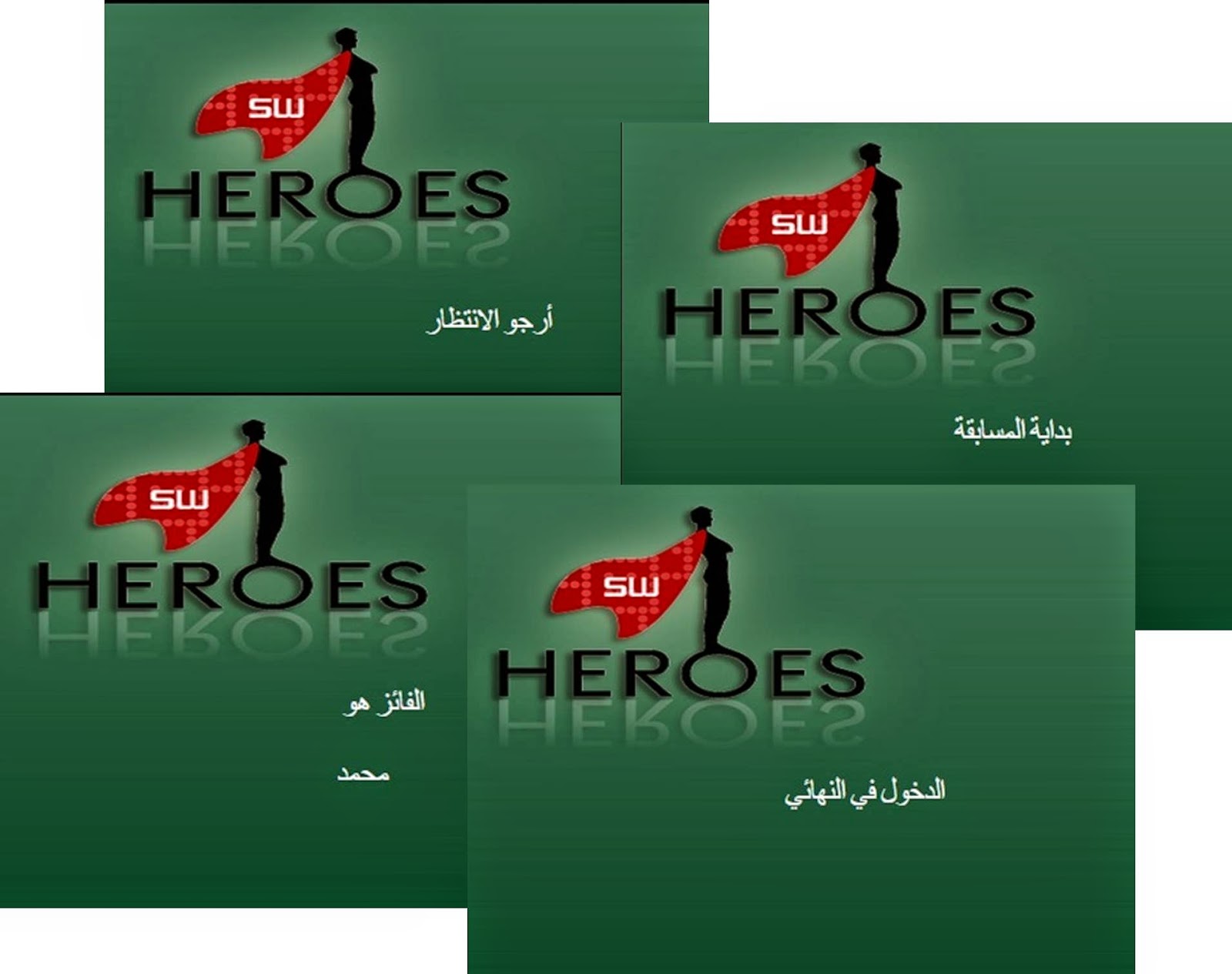
We developed a location aware content management service that can manage a competitions across different geographical locations in different regions, each location has its different time zone and language. For testing purposes, the competition was developed for UAE, Toronto, Vancouver and Montreal. Adding more locations by just adding the content and information of that location.
The system displays multimedia content that includes the competition logo and a message of the current stage. The current contest stage localized to the time zone of the location.
The competition has 3 main stages Start stage, Final stage, Winner stage. However, before the competition starts, a waiting message is displayed.

These are  screen shots of the player screen for the different stages for UAE (in Arabic) and Toronto (in English).

UAE stages

Toronto stages


Tuesday, 14 October 2014

Smart Drones for Smart Cities Conference!

I have attended "SMART DRONES FOR SMART CITIES" conference! A Technology Conference hosted by Novatech Labs, USA, The conference was in Waldorf Astoria, Palm Jumeirah, Dubai.
The Conference explored these Drone related topics:
  •        Drones, security and the latest interactive technology related to home automation
  •         Specific drone applications in agriculture, construction, policing, mining, energy, solar, mapping, logistics and delivery
  •         Novatech Lab's solutions to existing limitations of drones, including extended flight time, autonomous flight, long-range communication, modular sensor system and encryption
  •         Thalmic Myo Armband with Live Demo
  •         Mobile Security and Mobile Payments
  •         Smarthome and Smart devices

Thursday, 28 August 2014

Winning Third Place in Arab innovation Competition

I participated in the Third Arab Innovation Network Annual Conference (AINAC 2014) 27-28 September, AbuDhabi, UAE, the Youth Competition, which aims to provide a platform for talented and bright minds to showcase their ideas in front of an international audience and get feedback from experts in the field. 
Among 150 participants from different Arab countries, only 11 reached the finals. We presented our ideas/ projects in front of international judges who are experts in the field. I won the third place in the competition by my project "Manasik Guide Devices for Hajj and Umra". which are devices provided for Pilgrims and organizers to help and guide pilgrims in their process during Hajj and Umra as well as keeping track of accompanies -specially children- who are easily getting lost in Hajj. Moreover, Monitoring applications are provided to organizers to manage the whole process of pilgrims and enable helping them easily.
This video illustrate the project idea. manasik guide devices.


Sunday, 18 May 2014

Usable Microwave - Design Thinking

Continuing with the Human Computer Interaction course, we designed a prototype for more usable microwave. The prototype was mainly made by papers..
The Microwase features were as the following:

  • Two sections of heating, where the user can use either the quick settings or the customized settings.
  • The quick setting is two minutes long of heating and usually for fast heating. Only one click is needed to run this program.
  • The customized setting is used to heat for a certain temperature degree for food. The level of heating is gradual from cold to very hot by color code from blue to dark red. The user just slides the scrolling  bar to the desired degree according to the color then the heat is starting. It is one simple movement action for this program.
  • The case of the microwave is suggested to be a removable container so that it is easy to wash. 
  • The button and the slide bar are located in the door hand itself to increase usability by not having much movement.
This design is easy to use, easy to clean and no need any knowledge about the timer or power needed to heat your food. Just the desired final temperature of the food. With two configurations that could be used separately or at the same time.


Thursday, 20 March 2014

The Cube Satellite (CubeSat) project brochure

I designed a simple brochure for the Cube-Satellite project

The project  BROCHURE Cube-Sat brochure.

The Cube Satellite (CubeSat) project has started in University of Khartoum Electrical and Electronics Engineering Department in October 2010 with the main objective to design, build and launch a fully functional satellite (KN-Sat1). KN-sat1 is the first Sudanese educational Cube satellite complying with the CubeSat specifications. I worked in developing KNSAT prototype which succeeded in operations and able to take photos at certain GPS location and send it to the ground station. It also succeeded in sending RTTY signal for tempreture and GPS location (more details are available in arduino sending RTTY via HX1 radiometrix)
You can also check our facebook page KN-SAT1 project


Wednesday, 12 March 2014

Microsoft open door event

Open Door, Microsoft’s biggest I.T. event organized annually in the Middle East and Africa region was held on 12/3/2014 in AbuDhabi. Microsoft is seeking toward developing platforms and applications in many new trends such as social, cloud, big data and mobility.
In social trends, Microsoft presented the Yammer platform for social enterprise. They also have platforms for private and public cloud having tools such as Azure and office 365. Microsoft platforms can help extending organizations' data centers easily  Moreover, Microsoft presented the new Microsoft office excel tool for big data that can process large amount of data in high speed. It can also visualize data in graphs and maps by connecting different tables in business intelligence technology.
On the other hand, Microsoft partners presented their devices for mobility. For example, Dell, Intel, hp, alpha data and others. 
 for more information about the event check their website Microsoft Oper Door Event

Thursday, 6 March 2014

The Marshmallow Challenge

last Tuesday 4/3/2014 we had the marshmallow challenge at university and our group had a high score of 23 inches comparing to the other group of 16 inches. :) 

The Marshmallow Challenge is a remarkably fun and instructive design exercise that encourages teams to experience simple but profound lessons in collaboration, innovation and creativity.
The task is simple: in eighteen minutes, teams must build the tallest free-standing structure out of 20 sticks of spaghetti, one yard of tape, one yard of string, and one marshmallow. The marshmallow needs to be on top.


For more information about the marshmallow challenge visit the link The Marshmallow Challenge

Monday, 29 July 2013

arduino sending RTTY via HX1 radiometrix

I used the arduino kit to send text in RTTY mode through Radiometrix HX1 Transmitter.
You can find more details here.
Also an rtty library can be used by including it to your program and just define an object and TX data.
I used 144.800 MHz. and received in University of Khartoum ground station.


Sunday, 23 June 2013

Connecting Android Smart phone to Transceiver

Today I have built an interface circuit that connects the audio of the Android smart phone to the PTT and the input of the transceiver.
This circuit was built to send Images from mobile using SSTV software.


First, It was built in bread board just for testing then it will be built in perforated board.

The circuit diagram and more details can be found in This Link.

Sunday, 26 May 2013

ITSMF launching event

itSMF Sudan Emerging Chapter Launching Event, ITIL standard, IT service management best practices. 25/5/2013


Saturday, 25 May 2013

TEgypt Software workshop

Attending Software Engineering guidelines at TEgypt training center at 1:00 pm